
Why Opioids Mess With Your Body Clock: A Sex-Specific Story

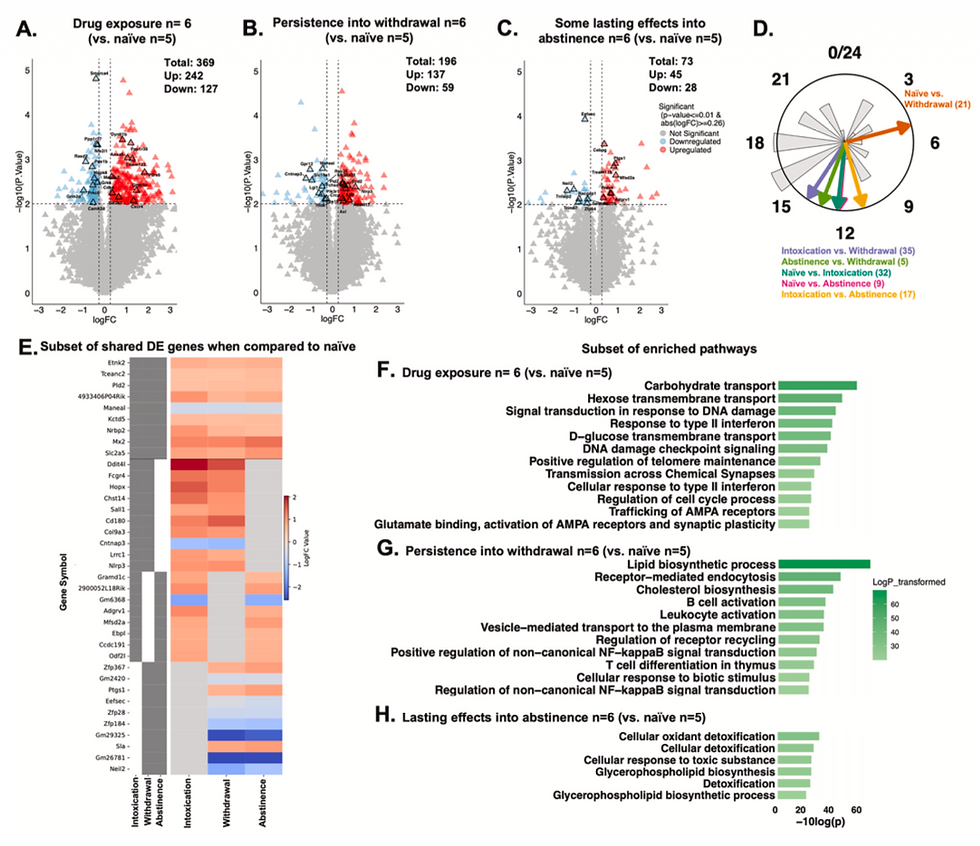
Sleep and circadian rhythm disruptions are some of the most common and frustrating symptoms of opioid use disorder. Many people in recovery struggle with insomnia or find that their internal biological clock is completely out of sync. In our latest study in collaboration tithe the Logan lab, we looked at a tiny but powerful region of the brain called the suprachiasmatic nucleus (SCN), which acts as the body's master clock, to see exactly how oxycodone rewires it.
The Big Question
We wanted to know how chronic oxycodone use affects the gene activity in the SCN master clock. Specifically, we set out to discover if these molecular changes persist during withdrawal and long term abstinence, and whether the impact is different for males and females.
The Study: Tracking the Master Clock
To find these answers, we used genetically diverse rats that could choose to self administer oxycodone, mimicking the variety and choice seen in human addiction. We analyzed the gene expression in the SCN at three critical stages:
Active Use: During the period of regular oxycodone intake.
Withdrawal: 12 hours after the last dose.
Abstinence: After 28 days of being clean.
What We Discovered
Our findings revealed that oxycodone leaves a long lasting and highly sex-specific mark on the body's master clock:
Persistent Rewiring: We found that oxycodone changes the activity of hundreds of genes in the SCN. Many of these changes did not go away after stopping the drug; they persisted even after four weeks of abstinence.
Sex Differences are Striking: The molecular "signature" of oxycodone was almost entirely different between males and females. In fact, we found very little overlap in the specific genes that were affected.
Unique Female Vulnerability: Females showed significantly more changes in genes related to neuroplasticity(the brain's ability to rewire itself) and inflammatory signaling. This suggests that the female biological clock might be more sensitive to the disruptive effects of opioids.
Clock Genes in Flux: Core "clock genes," which are the gears that keep our internal timing accurate, were altered across all stages, explaining why sleep and daily rhythms stay broken for so long during recovery.
Why It Matters
This research proves that opioid addiction isn't just a motivational problem; it is a fundamental disruption of the body's internal timing system. These long lasting molecular changes in the SCN explain why sleep and circadian issues are so persistent and why they are such major triggers for relapse.
By identifying these sex specific molecular signatures, we can work toward personalized treatments that help "reset" the biological clock. Supporting healthy sleep and stable daily rhythms might be one of the most powerful ways to strengthen recovery and prevent relapse, especially if we tailor those strategies to the unique biological needs of men and women.
Reference: Delorme, T. C., Sambare, S., Williams, B. R., Gamble, M. C., Carrette, L. L. G., Solberg Woods, L. C., Maturin, L., Palmer, A. A., George, O., & Logan, R. W. (2025). Sex-specific transcriptional signatures of oxycodone persist during withdrawal and abstinence in the suprachiasmatic nucleus of heterogeneous stock rats. Addiction Neuroscience, 17, 100240. https://www.sciencedirect.com/science/article/pii/S2772392525000458


Comments