
From nanometers to meters
One addiction, nine scales
Addiction is not a problem at one level of biology. The same disorder shows up as a variant in the genome, a receptor at a membrane, a synapse, an ensemble of neurons, a circuit, a brain-wide network, and finally a behaving animal. Zoom through the levels the lab works at — nine orders of magnitude, from a billionth of a meter to a meter.
Drag to zoom continuously, or press play to sweep all nine orders of magnitude.
01 · ~1 nm
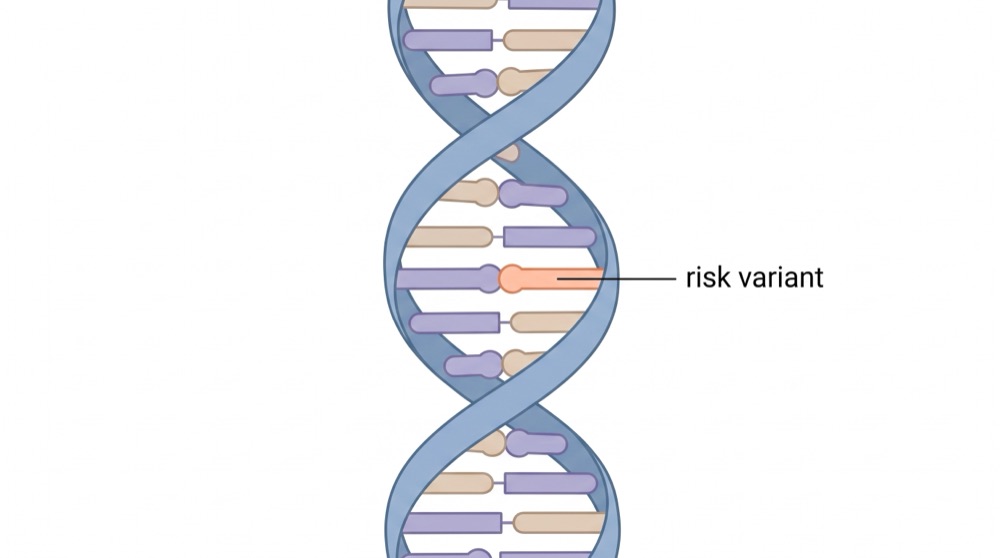
Genes
DNA variants and gene-expression programs that bias who becomes addicted.
How we work hereGWAS in heterogeneous stock rats, single-cell and spatial transcriptomics
3 discoveries focus on this scale, 25 articles touch on this scale as part of a wider study.
- 2026 The largest genetic study of cocaine self-administration ever conducted in rats identified six genome-wide significant loci, including variants in carboxylesterase genes (Ces1c/Ces1d) that metabolize cocaine and a gene (Trak2) also linked to cocaine use disorder in humans.
- 2024 In the outbred heterogeneous stock rats used for addiction genetics, the Y and mitochondrial chromosomes come in just two versions each and have essentially no effect on behavior or physiology — meaning past studies that ignored them missed nothing important.
- 2022 In rats with addiction-like behavior, gene-regulatory 'enhancer' switches controlled by stress-hormone (glucocorticoid) receptors are turned down in reward-circuit brain regions — and glial cells, not just neurons, appear to drive these addiction gene programs.
02 · ~10 nm
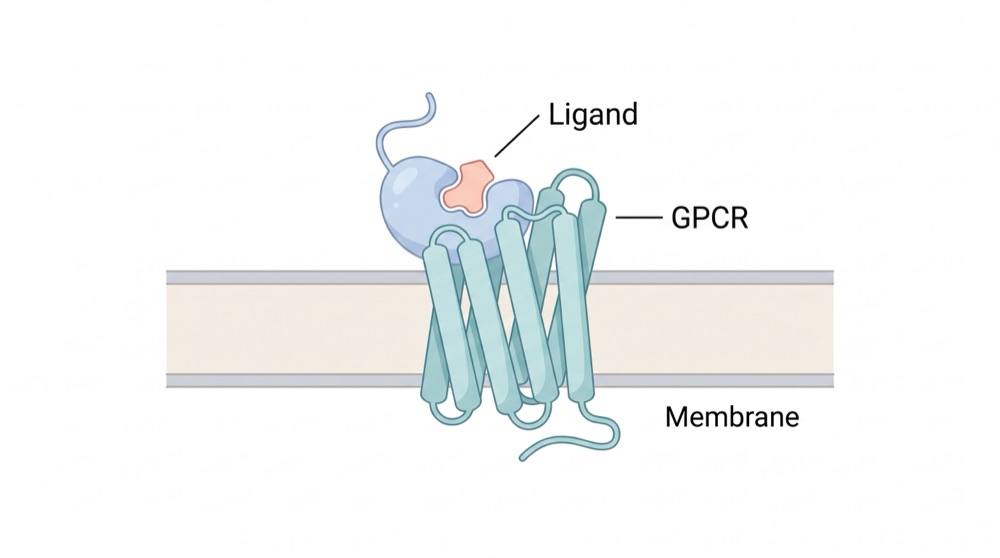
Molecules
Receptors, peptides and drugs meeting at the membrane.
How we work hereReceptor pharmacology, CRF and opioid systems, metabolomics
23 discoveries focus on this scale, 88 articles touch on this scale as part of a wider study.
- 2025 Oxycodone leaves lasting, sex-specific marks on gene activity in the brain's master clock (the suprachiasmatic nucleus) that persist weeks into abstinence and track with addiction severity.
- 2025 In the brain's reward hub, the gene-expression signature of opioid addiction in women matches rodents that were simply exposed to opioids, while the signature in men matches rodents that chose to take the drug — suggesting different drivers of addiction biology in each sex.
- 2025 A single blood draw can reveal oxycodone's fingerprint on the body's chemistry — and some of those blood chemicals, measured before a rat ever touches the drug, track how addicted it will become.
- 2024 In nicotine-dependent rats, a dose of nicotine paradoxically triggers eating within minutes -- because it lowers the satiety hormone glucagon, and giving glucagon back blocks the effect.
- 2023 Cocaine inflames the brain in both sexes, but it switches on the NLRP3 inflammasome in the striatum of males and in the hippocampus of females — so an anti-inflammatory treatment for cocaine addiction may need to differ by sex.
- 2023 Directed evolution produced a bacterial nicotine-destroying enzyme that works ten times better in the bloodstream, bringing an injectable anti-smoking therapy within practical dosing range.
- 2023 Stopping cocaine rewrites the small-RNA control layer of the brain's decision-and-reward circuit, and the changes differ sharply between the first hours of withdrawal and a month of abstinence.
- 2022 A single injection of the growth factor BDNF into the brain's reward hub makes a drug-naive mouse behave as if it were already nicotine dependent and in withdrawal — flipping the motivational system from dopamine D1 to D2 receptors.
- 2022 Wiping out gut bacteria with antibiotics makes a subset of rats take more oxycodone — and restoring the bacteria's key products, short-chain fatty acids, brings their opioid intake back down, proving these gut metabolites causally restrain addiction-like behavior.
- 2020 This review maps the next generation of quit-smoking treatments that bypass nicotine receptors entirely — vaccines, antibodies, nicotine-eating enzymes, cannabinoids, and the diabetes drug metformin.
- 2019 A drug that blocks cyclin-dependent kinases, (S)-CR8, selectively cut excessive alcohol drinking in alcohol-dependent rats while leaving normal drinking and the taste for sweets untouched.
- 2018 Blocking a metabolic detox enzyme raises the brain's own GABA-acting molecule and cuts alcohol drinking, working even better in alcohol-dependent rats than in nondependent ones.
- 2018 Nicotine keeps body weight down not by cutting appetite or burning more calories overall, but by shifting the body to burn fat instead of carbohydrate.
- 2018 Bolting an albumin-grabbing tag onto a bacterial nicotine-eating enzyme stretched its lifetime in the body to over five days and let it strip nicotine out of blood and brain entirely, preventing rats from becoming nicotine dependent.
- 2017 A single nicotinic receptor subunit, alpha-5, is the brain's brake on nicotine: without it, mice no longer find high doses of nicotine or nicotine withdrawal aversive.
- 2015 Blocking the brain's stress-hormone receptor with mifepristone cuts excessive drinking in alcohol-dependent rats and reduces craving and drinking in people with alcohol dependence.
- 2014 Even without the virus replicating, low-level HIV proteins in the brain inflame the hippocampus, shut down the growth-factor signals neurons need, and leave rats with a working memory problem.
- 2013 A single dose of a long-lasting kappa opioid receptor blocker stops rats from ever escalating their heroin use — pinpointing the brain's dynorphin stress system in the nucleus accumbens shell as the engine of the transition from casual use to addiction.
- 2012 A single highly selective blocker of the alpha4beta2 nicotinic receptor (4-nitro-PFEB) shuts down nicotine's rewarding effects across four different animal models, confirming this receptor as the linchpin of nicotine reward and a prime drug target for smoking cessation.
- 2010 Too little of the brain steroid allopregnanolone in specific sleep-related brain regions is what flattens the daily activity rhythm of aged rats — and lowering it in young rats reproduces the old brain's broken rhythm.
- 2009 The brain's own cannabis-like signalling system becomes overactive as cocaine use escalates, and blocking its receptor in the nucleus accumbens selectively deflates how hard dependent rats will work for the drug.
- 2004 Brain steroid levels could serve as biomarkers of how well an individual's memory is aging — but only if we measure many steroids at once with mass spectrometry instead of one at a time.
- 2003 Why do some individuals age with a sharp memory while others decline? This synthesis proposes that levels of a single brain-made steroid, pregnenolone sulfate, help determine who ages well.
03 · ~1 µm
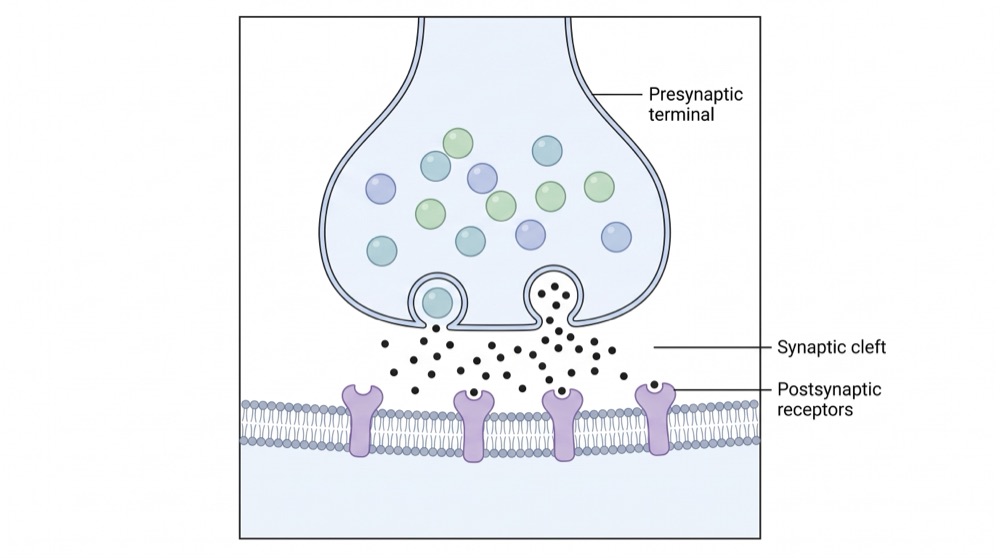
Synapses
Transmission strength reshaped by drug exposure and withdrawal.
How we work hereSlice electrophysiology, synaptic transmission
3 discoveries focus on this scale, 14 articles touch on this scale as part of a wider study.
- 2020 Rats that become highly addicted to the prescription opioid oxycodone have too little of the brain peptide nociceptin in their amygdala, and restoring it calms the overactive amygdala and reverses their escalated drug taking.
- 2018 In a small thalamic relay, the stress peptide dynorphin acts as a direct brake on orexin, cancelling out orexin's ability to trigger cocaine seeking without touching seeking for a natural reward.
- 2017 Alcohol dependence rewires the amygdala's response to alcohol, switching it from a calcium-channel mechanism to a stress-hormone (CRF1) mechanism that drives excessive drinking.
04 · ~20 µm
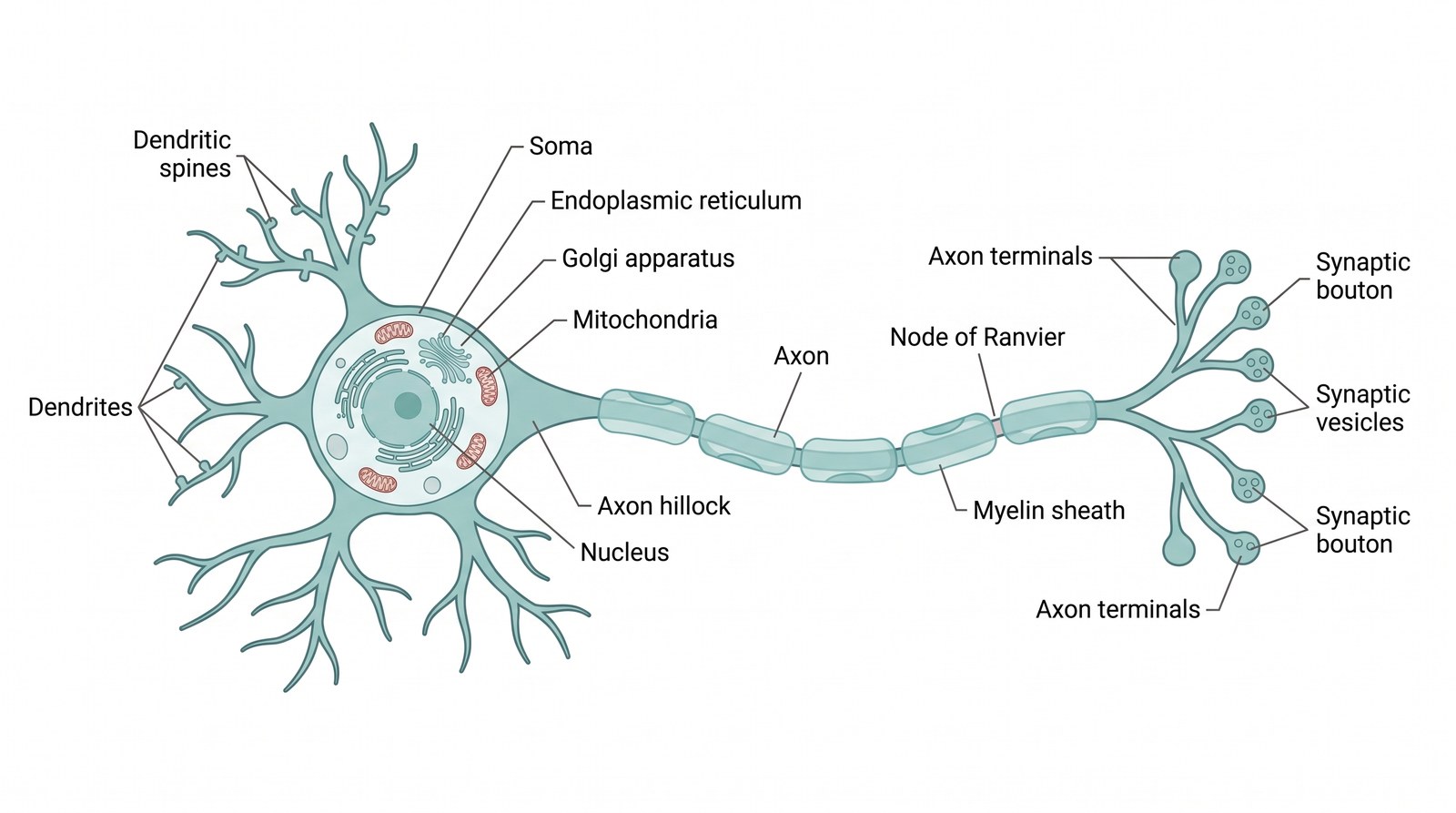
Cells
A single neuron: dendrites receive, the soma integrates, the axon transmits. Drugs remodel each compartment, from gene expression in the nucleus to the firing of the axon.
How we work hereFos mapping, single-cell transcriptomics, neuronal ensembles
9 discoveries focus on this scale, 41 articles touch on this scale as part of a wider study.
- 2023 A cell-by-cell map of the amygdala in addicted versus resilient rats traced cocaine vulnerability to energy metabolism and excess GABA inhibition, and blocking the enzyme GLO1 reversed both the brain signature and relapse-like drug seeking.
- 2017 Alcohol memories and cravings are stored not in whole brain regions but in small, scattered teams of neurons - 'neuronal ensembles' - in the prefrontal cortex and amygdala.
- 2016 A small, specific group of neurons in the central amygdala that switches on during alcohol withdrawal is not just a marker of dependence - it is required for excessive drinking, and killing it lastingly reduces drinking and withdrawal symptoms.
- 2015 Nicotine dependence with repeated withdrawal periods abnormally boosts the birth of new neurons in the hippocampus, and the more new neurons a rat has, the more nicotine it seeks after abstinence.
- 2014 Newly born neurons in the hippocampus that appear while a rat is learning to give up cocaine act as a brake on relapse — block their birth and a single cocaine hit triggers far more drug seeking.
- 2014 A newly identified group of dopamine neurons inside the brain's reward center makes its own stress peptide, CRF, and chronic nicotine turns these cells into the engine of withdrawal aversion and escalating intake.
- 2012 How much methamphetamine a rat takes determines the fate of new neurons being born in its hippocampus — occasional use boosts newborn-cell numbers and memory, while heavy extended use suppresses them and predicts both memory loss and stronger relapse.
- 2011 A tiny, sparsely scattered set of excitatory neurons in the ventromedial prefrontal cortex — not the whole region — carries the memory of a drug-associated place and drives relapse to heroin seeking.
- 2006 In aged rats, a broken sleep-wake rhythm — traced to shrinking cholinergic neurons in a brainstem sleep hub — predicts which individuals will lose their long-term memory.
05 · ~1 mm
Circuits
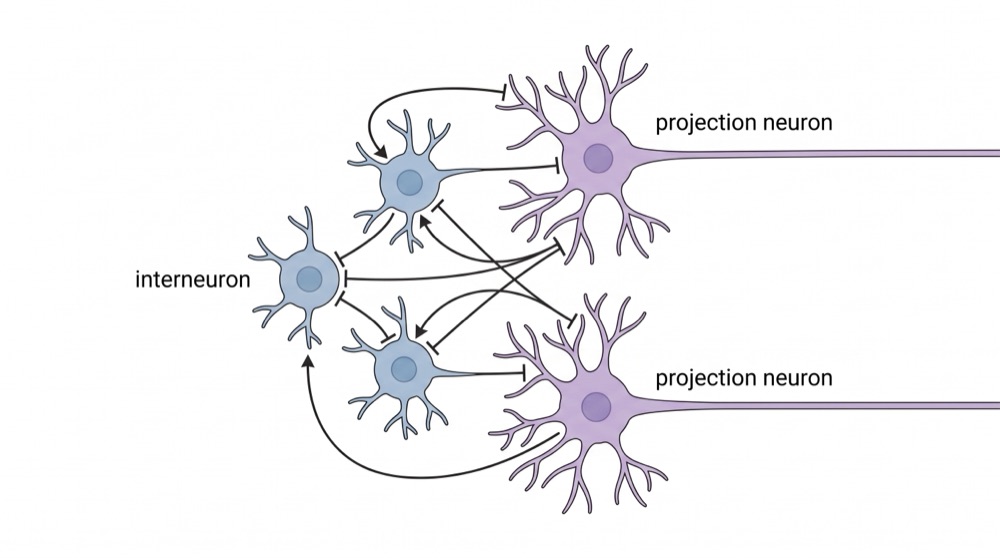
Local microcircuits: interneurons gating the projection neurons that carry signals onward.
How we work hereOptogenetics, chemogenetics, deep brain stimulation
27 discoveries focus on this scale, 44 articles touch on this scale as part of a wider study.
- 2026 A drug that never reaches the brain still cuts heavy drinking in alcohol-dependent animals — it appears to work by acting on the gut and sending a calming signal up the vagus nerve.
- 2025 Nicotine addiction is driven less by pleasure than by escape from a stress-fueled negative emotional state, and social stress amplifies this shift by dysregulating CRF, dopamine, and opioid signaling.
- 2024 In rats with a history of nicotine use, an acute dose of nicotine switches the brain's feeding network into 'hunger mode' -- turning up pro-feeding hubs and silencing satiety neurons.
- 2023 Two hubs of the amygdala do not have one job each: this chapter shows that specific wires in and out of the basolateral and central amygdala causally control different stages of the addiction cycle.
- 2022 Hypocretin/orexin signaling from the lateral hypothalamus to the central amygdala is necessary for alcohol drinking in dependent rats — silencing that specific projection, or blocking either hypocretin receptor, cuts drinking.
- 2022 Some nicotine withdrawal behaviors — like grooming and scratching — are not symptoms of misery but coping actions that actively quiet the overactive anxiety-driving GABA neurons of the interpeduncular nucleus.
- 2020 This review synthesizes the evidence that the brain stress peptide CRF is the engine that turns recreational alcohol and nicotine use into addiction, by generating the negative emotional states people drink and smoke to escape.
- 2020 Wiping out gut bacteria with antibiotics rewires which brain cell ensembles fire during opioid intoxication and withdrawal, revealing that the gut microbiome shapes the brain's response to oxycodone.
- 2020 A brain pathway from the insula (the body-sensing cortex) to the reward-processing ventral striatum drives compulsive-like eating in rats given on-and-off access to sugary food, and silencing it with light dials the compulsion down.
- 2019 The small group of amygdala neurons that switches on during alcohol withdrawal is made mostly of stress-hormone (CRF) neurons, and silencing their projection to the BNST with light reverses excessive drinking and withdrawal signs.
- 2019 Addiction shifts from taking drugs for pleasure to taking them for relief, as brain stress systems like CRF and dynorphin in the extended amygdala and habenula pathways take over the motivation to use.
- 2018 A small, previously unrecognized group of brainstem neurons marked by estrogen receptor 1 is the switch that relaxes the urethral sphincter and lets an animal urinate on purpose.
- 2018 Two neighboring serotonin hubs divide the labor of cocaine addiction: one governs moderate use through the hypothalamus, the other governs compulsive use through the amygdala.
- 2017 Smokers keep smoking not just for nicotine's pleasure but to escape the anxiety and emotional misery of withdrawal, which is driven by recruitment of brain stress systems such as CRF.
- 2017 Deep brain stimulation of a small motor-circuit hub, the subthalamic nucleus, prevents rats from spiraling back into heavy heroin use after abstinence.
- 2015 A new genetically engineered rat lets scientists see and control the brain's stress-peptide (CRF) neurons directly, revealing that amygdala CRF cells act as local hubs that both inhibit and excite their neighbors.
- 2015 Daily nicotine speeds up the transition to compulsive alcohol drinking by recruiting small, specific ensembles of neurons across the brain's stress and reward circuits.
- 2015 The anxiety that hits smokers when they quit is generated by a stress peptide released from dopamine neurons onto a small midbrain hub, the interpeduncular nucleus.
- 2014 The real engine of addiction is not just individual vulnerability plus drug exposure but 'motivational withdrawal' — the recruitment of brain stress systems that makes drug taking a way to escape a negative emotional state.
- 2014 Addiction is reframed as a disorder of too much brain stress: repeated drug use recruits anti-reward stress systems that create the misery people then keep using drugs to escape.
- 2013 A commentary framing new human evidence that the dorsolateral prefrontal cortex acts as the brain's 'GO' amplifier for cigarette craving — turning it off with magnetic stimulation quiets craving by dampening the value signals of the orbitofrontal cortex and striatum.
- 2012 Addiction develops as an 'allostatic load': the brain's dopamine reward system progressively weakens while the CRF stress system stays chronically switched on, and the interplay between these two systems drags the emotional set point into a pathological state.
- 2012 During alcohol withdrawal, binge-drinking rats abnormally activate inhibitory GABA and CRF neurons in the prefrontal cortex — and how strongly this region lights up predicts both memory impairment and how much alcohol the rat will binge next.
- 2012 The brain uses two different dopamine channels for nicotine's bad feelings: fast 'phasic' dopamine acting on D1 receptors signals the aversion of a first nicotine hit, while a drop in slow 'tonic' dopamine acting on D2 receptors signals the misery of withdrawal in dependent animals.
- 2007 The brain's own stress peptide CRF surges in the amygdala during nicotine withdrawal, producing anxiety and driving the rebound overuse of nicotine after a period of abstinence — and blocking its receptor prevents both.
- 2006 Brain-made steroids act as selective volume knobs on the brain's acetylcholine projection systems — a framework explaining how these molecules shape sleep and memory, and why their decline matters in aging.
- 2004 Delivering the brain-made steroid pregnenolone sulfate directly into a brainstem sleep hub (the PPT) is enough to boost REM sleep, revealing a new chemical pathway the brain uses to control its own sleep states.
06 · ~5 mm
Brain regions
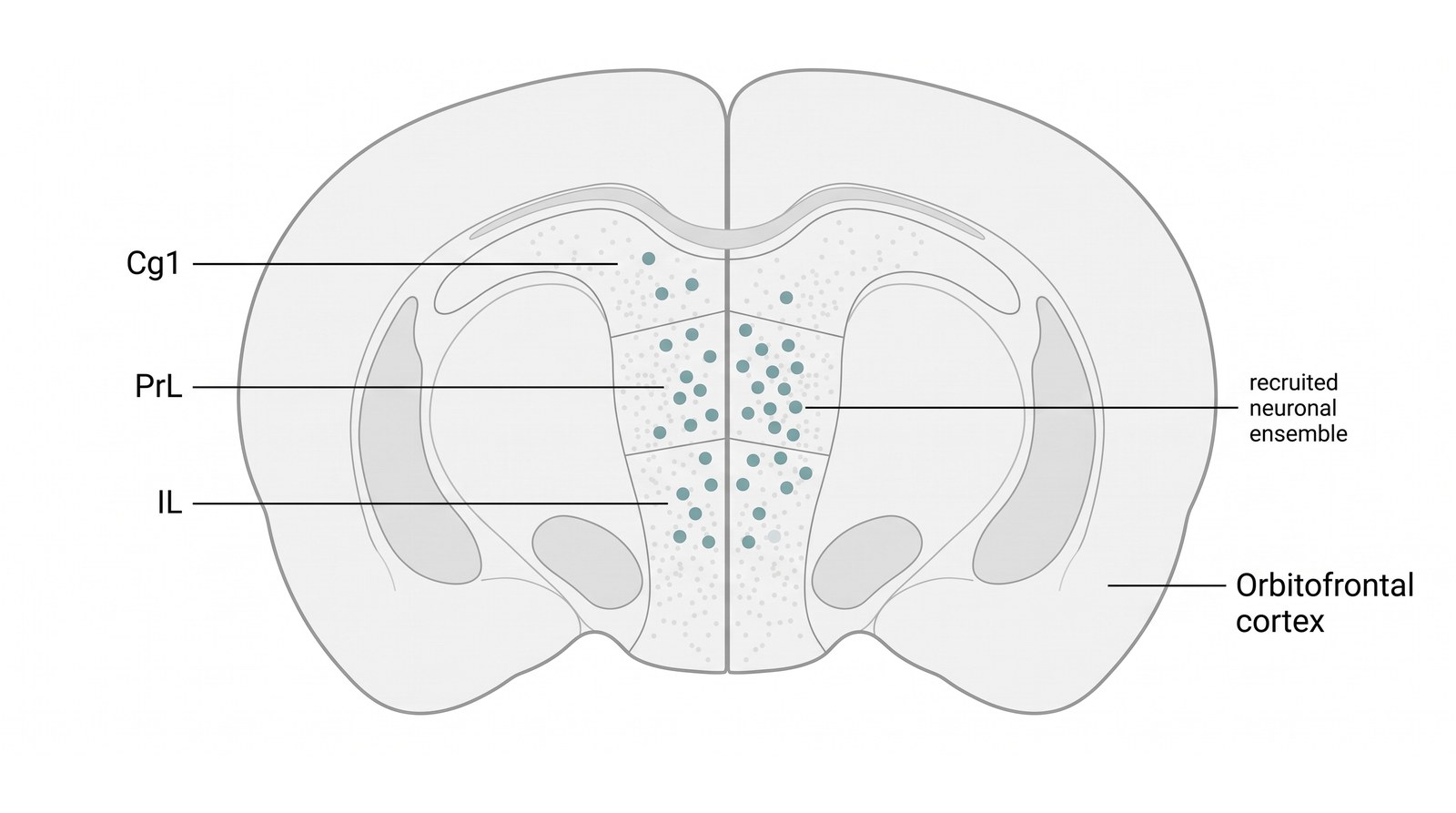
The medial prefrontal cortex, one hub of the addicted brain, where sparse ensembles of neurons are recruited during withdrawal and drive compulsive drug seeking.
How we work hereSite-specific pharmacology, lesions, regional Fos mapping
8 discoveries focus on this scale, 72 articles touch on this scale as part of a wider study.
- 2023 Rats that choose to dose themselves with alcohol vapor become just as dependent as rats forced to inhale it, but their brains light up far more widely during withdrawal, showing that how dependence is acquired leaves its own neural fingerprint.
- 2018 Turning on GPR139, an orphan receptor concentrated in the habenula, selectively cut compulsive alcohol drinking and withdrawal pain in alcohol-dependent rats without touching normal drinking.
- 2018 Slow brain rhythms in the subthalamic nucleus grow louder as rats lose control over cocaine, and deep brain stimulation that quiets those rhythms both prevents escalation and restores controlled use after abstinence.
- 2015 Rats with long daily access to nicotine develop withdrawal anxiety and pain hypersensitivity that drive excessive intake, and blocking CRF1 stress receptors in the amygdala prevents it.
- 2015 The brain's own dysphoria system - dynorphin acting on kappa opioid receptors in one small part of the nucleus accumbens - drives the escalation into compulsive methamphetamine use.
- 2014 Silencing the gene for the brain's own 'dysphoria peptide' dynorphin in a small patch of the nucleus accumbens makes rats less depressed and erases the lasting sensitization to cocaine.
- 2014 Blocking one neuropeptide Y receptor in the amygdala calms anxiety in alcohol-dependent rats without reducing how much alcohol they drink, showing the two symptoms run on separate switches.
- 2008 Only rats that lose control and escalate their cocaine intake develop lasting working-memory deficits — and the size of the deficit tracks a loss of neurons in their decision-making cortex months later.
07 · ~2 cm
Whole brain
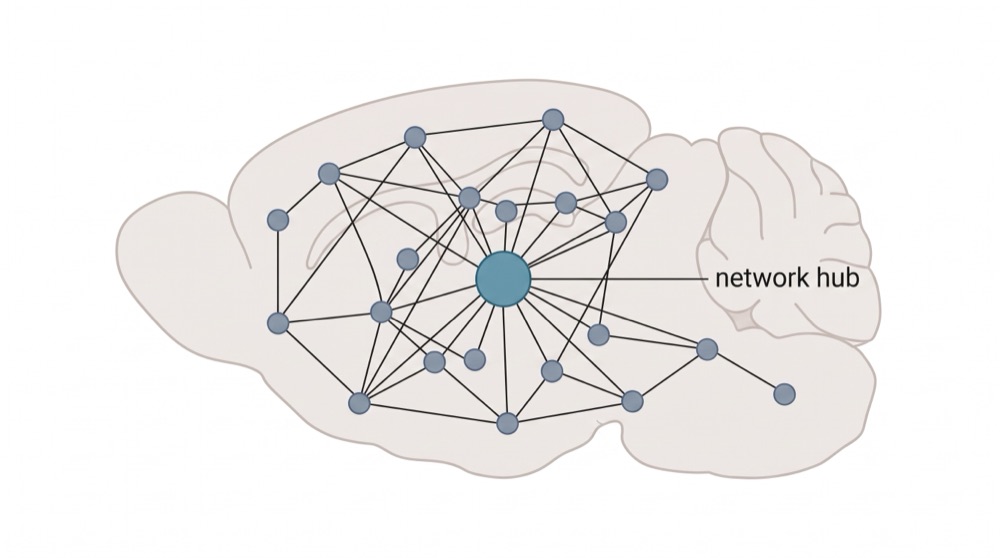
Brain-wide networks reorganizing as dependence develops.
How we work hereLight-sheet imaging, single-cell whole-brain imaging, functional connectomics
8 discoveries focus on this scale, 17 articles touch on this scale as part of a wider study.
- 2024 Two anti-drinking drugs — the stress-blocker R121919 and the opioid-blocker naltrexone — both reconnect the prefrontal cortex to the rest of the brain during alcohol withdrawal, but they do it in nearly opposite ways.
- 2023 During nicotine withdrawal the brain's acetylcholine-producing hubs do not act as one system: they split into two opposing networks — one in the basal forebrain, one in the brainstem and thalamus — that each become hyperconnected to the rest of the brain.
- 2022 The trillions of microbes in the gut talk to the brain through nerves, metabolites, hormones, and the immune system — and this two-way conversation shapes, and is reshaped by, addiction to alcohol, opioids, stimulants, nicotine, and cannabis.
- 2021 Withdrawal from cocaine, methamphetamine, or nicotine does not hijack one specific brain region — instead it dissolves the brain's normal modular organization, collapsing it from a cortical-driven into a subcortical-driven network.
- 2021 Most of neuroscience has studied only a handful of brain regions — 9 regions account for 75% of all publications — and new unbiased whole-brain imaging and network approaches can finally reveal the 'hidden brain' regions that have been overlooked.
- 2020 Mapping activity of the entire mouse brain at single-cell resolution revealed that alcohol dependence and abstinence reorganize the whole brain into three tightly linked modules with far less modularity, exposing new hub regions that may drive alcohol use.
- 2017 People and animals differ in which brain systems break down during addiction, and mapping these individual differences is the key to personalized addiction treatment.
- 2010 Addiction is reframed as a failure of prefrontal self-control over separate brain modules for reward, stress, emotion, pain, habits, and decision-making — and which module fails first explains why people become addicted in such different ways.
08 · ~0.2–2 m
Behavior
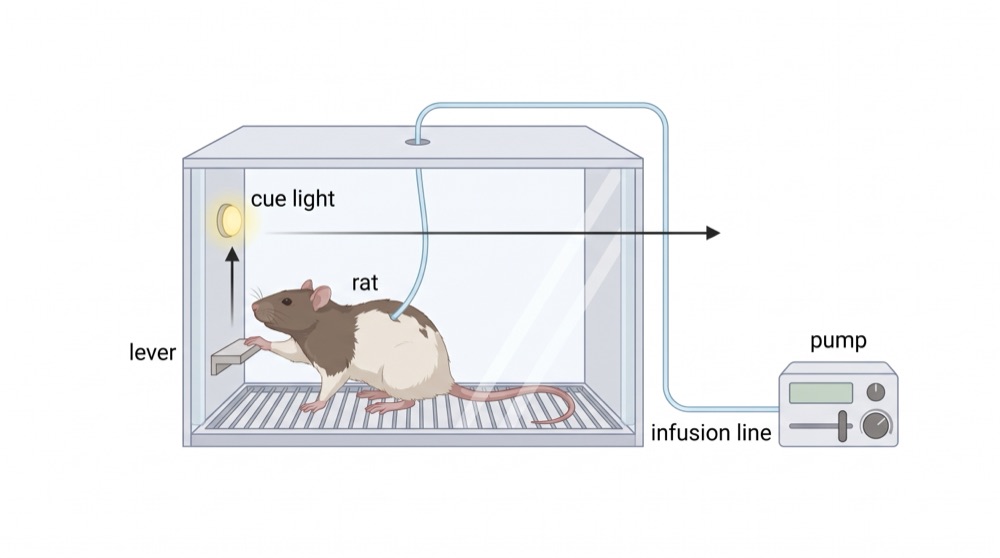
Escalation, compulsivity and withdrawal — the organism as a whole.
How we work hereSelf-administration, vapor models, machine-vision phenotyping
41 discoveries focus on this scale, 122 articles touch on this scale as part of a wider study.
- 2026 Most female Heterogeneous Stock rats turn out to have irregular hormonal (estrous) cycles even without any drug exposure, and the rats with the most severe irregularities take more cocaine despite punishment - while the cycle phase itself has no effect on cocaine taking.
- 2026 Using machine-vision tracking of rats' behavior in the minutes before cocaine became available, we found that 'wanting' the drug (incentive salience) - not becoming sensitized or tolerant to its stimulant effects - is what drives escalating cocaine use.
- 2026 In over 500 genetically diverse rats, the animals that got the most pain relief from their very first doses of oxycodone were the ones most likely to become compulsive users — but that early sensitivity explains only a small slice of who becomes addicted.
- 2024 In over 500 genetically diverse rats, the three classic hallmarks of cocaine addiction -- taking more and more, working harder for the drug, and using despite punishment -- turn out to be one and the same underlying trait.
- 2024 The anti-cholesterol drug fenofibrate failed to reduce alcohol craving or drinking in people with alcohol use disorder — and matched rodent experiments revealed why: the highest FDA-approved human dose is more than five times too low to engage its brain target.
- 2024 Wiping out the gut bacteria of rats makes them work harder for cocaine and relapse more strongly after weeks of abstinence, and simply giving back the fatty acids those bacteria make reverses both the behavior and the brain gene changes.
- 2024 A Raspberry Pi-based camera system can record 60 rats in drug self-administration chambers at once, in perfect sync, for about one tenth the cost of commercial systems.
- 2023 The common blood-pressure drug propranolol, a beta-blocker, prevents rats from escalating their cocaine use and lowers their motivation to work for the drug — without affecting their appetite for a sweet reward.
- 2023 Genetic background, more than sex, shapes how rats respond to the prescription opioid oxycodone — and one strain that breaks oxycodone down into a more potent metabolite takes to the drug fastest while resisting its dangerous respiratory effects.
- 2022 The road from social drinking to alcohol use disorder is driven by distinct, interacting factors at each stage — and the field has mostly studied the early steps, leaving the crucial escalation into dependence poorly understood.
- 2022 High blood levels of the satiety hormone leptin before any cocaine exposure protect rats from developing addiction-like behavior, and giving leptin reduces cocaine seeking even after weeks of abstinence.
- 2022 The addiction field's favorite lab test of 'compulsive' drug use — continuing despite punishment — does not actually measure compulsion, and treating it as addiction's defining feature risks misleading the whole field.
- 2022 Deep brain stimulation of the nucleus accumbens shell soothes the irritability of cocaine withdrawal but, contrary to expectations, slightly increases cocaine taking in dependent rats — a warning that DBS may help abstinent patients yet worsen active use.
- 2022 Nicotine, famous as an appetite suppressant, actually makes rats eat and drink MORE in the first five minutes after a dose — a paradoxical acute effect that may itself drive the long-term appetite suppression.
- 2021 Three of four next-generation selective glucocorticoid (stress-hormone) receptor modulators reduced alcohol drinking in rats without suppressing water intake, pointing to the stress-hormone receptor as a druggable target for alcohol use disorder.
- 2021 Even genetically diverse rats with severe addiction-like behavior almost always choose food over cocaine when drug-free — but the most addiction-prone individuals shift their choice toward cocaine specifically while intoxicated.
- 2021 Chronic cannabidiol (CBD) treatment prevents the physical signs of nicotine withdrawal — body tremors and heightened pain sensitivity — in nicotine-dependent rats, even at the lowest dose tested.
- 2020 Rats carrying HIV genes become more compulsive methamphetamine users than normal rats, and their prefrontal cortex shows a gene-expression signature of inflammation and neural injury — showing HIV and meth feed on each other in the brain.
- 2020 Rats given long daily access to intravenous oxycodone mirror human opioid addiction — females end up taking more drug than males, and withdrawal brings pain hypersensitivity and irritability — validating a realistic animal model of oxycodone use disorder.
- 2020 The lab created the first validated 'vaping rat' model — rats that voluntarily puff nicotine vapor to human-like blood nicotine levels and, after three weeks, show withdrawal, anxiety, relapse, and heart-lung damage.
- 2019 Blocking the dopamine D3 receptor with the drug VK4-116 reversed escalated oxycodone taking and eased withdrawal pain and irritability in opioid-dependent rats, pointing to a non-opioid treatment for opioid addiction.
- 2019 Just one week of breathing secondhand-like nicotine vapor as an adolescent was enough to produce nicotine withdrawal signs and make rats take more nicotine as adults.
- 2018 A new surgery-free model lets rats vape a potent opioid on demand and reproduces the full arc of human opioid addiction, from escalating use to withdrawal to relapse after six months clean.
- 2018 Cannabinoid exposure during adolescence left rats persistently irritable into adulthood but did not make them escalate cocaine use, arguing against a simple gateway effect on cocaine dependence.
- 2018 A bacterial enzyme that destroys nicotine in the bloodstream before it reaches the brain reversed nicotine dependence in rats, cut compulsive nicotine taking, and blocked relapse.
- 2017 Rats given control of an alcohol-vapor dispenser will voluntarily drink themselves into full-blown dependence - the first model where alcohol addiction is entirely self-induced.
- 2017 Cebranopadol, a pain drug already in human trials, reverses escalating cocaine use and blocks cue-triggered relapse in rats - a candidate first medication for cocaine addiction.
- 2017 Despite years of hype, the immune receptor TLR4 does not drive excessive alcohol drinking - a rigorous multi-lab test ruling it out as a therapeutic target.
- 2017 A step-by-step method for exposing rodents to nicotine vapor - like e-cigarette use - that produces human-relevant blood nicotine levels and true dependence.
- 2017 Alcohol withdrawal makes rats irritable for weeks into abstinence, and this irritability is driven by the brain stress hormone receptor CRF1.
- 2017 A history of binge-like, on-and-off drinking primes the brain so that alcohol dependence takes hold faster and harder than a steady-drinking history.
- 2014 In alcohol-dependent rats, the ultrasonic 'calls' a rat makes while waiting for alcohol track how much it will drink — revealing a vocal marker of the craving that drives escalated drinking.
- 2014 The ultrasonic calls rats make when a cue announces palatable food are a stable, individual 'craving signature' that depends on the brain's dopamine D1 and mu-opioid receptors.
- 2014 Breathing nicotine vapor 12 hours a day makes rats dependent and, for the first time without added drugs, drives them to escalate how much nicotine they take on their own.
- 2013 A synthesis showing that rats only develop human-like compulsive nicotine intake when models include cycles of abstinence and withdrawal — and that new nicotine-vapor models make it possible to study second-hand smoke and e-cigarettes in animals.
- 2012 Rats only escalate their nicotine intake the way human smokers do when long drug-access sessions are combined with repeated 24-48 hour breaks of abstinence, and blocking monoamine oxidase (an enzyme inhibited by tobacco smoke) boosts intake another ~50%.
- 2012 Combining two stress-axis drugs — metyrapone and oxazepam — at doses too low to work alone cuts nicotine self-administration in rats as effectively as varenicline, the leading smoking-cessation medication.
- 2011 The smoking-cessation drug varenicline cuts nicotine intake just as well in dependent rats as in casual ones — suggesting it works on nicotine's rewarding side, not on the stress-driven craving that follows abstinence.
- 2010 Rats simply breathing nicotine vapor reach the same blood nicotine levels as human smokers and become genuinely dependent — giving addiction research its first non-invasive inhalation model, including for second-hand exposure.
- 2006 A single experience of motherhood sharpens a rat's spatial memory for life and protects against memory aging — but stress during pregnancy erases this benefit entirely.
- 2006 Living in chronic environmental noise erodes long-term memory even after the noise ends — and it does so by stealing deep (slow wave) sleep, hitting stress-reactive individuals hardest.
09 · > 1 m
Populations
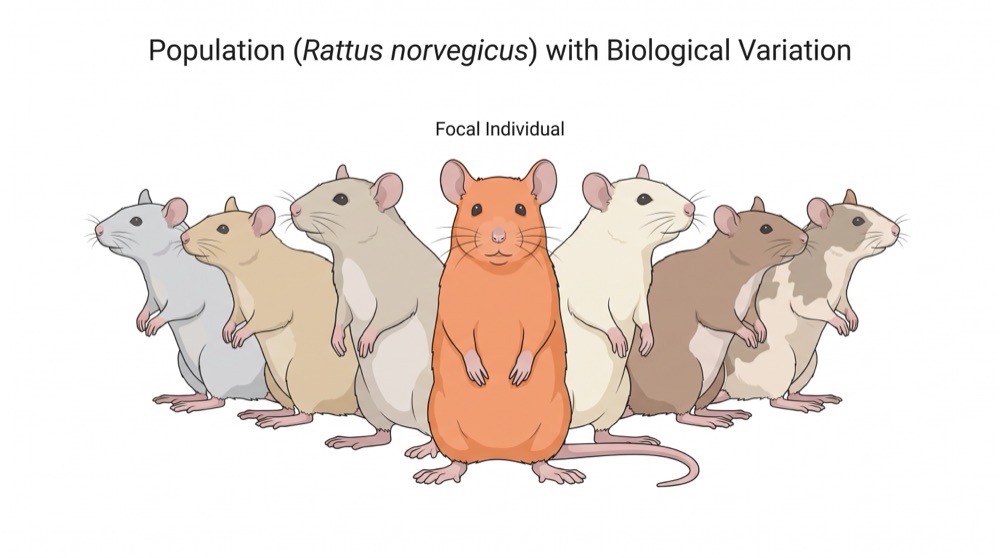
Individual differences across hundreds of genetically diverse animals.
How we work hereLarge HS rat cohorts, addiction index, open-access biobanks
7 discoveries focus on this scale, 37 articles touch on this scale as part of a wider study.
- 2023 Machine learning built from routine electronic-health-record data predicts how long a spine operation will actually take far more accurately than the hospital's usual method of averaging past cases.
- 2022 In a genetically diverse population of over 500 oxycodone-dependent rats, the three FDA-approved opioid-addiction medications work very unevenly — naltrexone helps both sexes, buprenorphine mainly males, and methadone only a quarter of individuals — and efficacy depends on how severe the animal's addiction-like behavior is.
- 2022 Screening over 530 genetically diverse rats for oxycodone taking, motivation, tolerance, and withdrawal pain revealed that each animal is remarkably consistent with itself but wildly different from its neighbors — creating an 'Addiction Index' that sorts individuals from resilient to severely addiction-prone for gene discovery.
- 2021 The lab created two open-access biobanks holding more than 20,000 biological samples from over 1,000 genetically diverse rats fully characterized for cocaine or oxycodone addiction-like behavior, free for any non-profit researcher to use.
- 2021 The mix of bacteria living in a rat's gut before it ever encounters cocaine — especially protective Actinobacteria like Bifidobacterium — predicts whether it will be resistant or vulnerable to developing addiction-like behavior.
- 2021 A rat's gut bacteria measured before any drug exposure forecast its future cocaine taking: abundant Akkermansia muciniphila predicted low cocaine responding, while Ruminococcaceae predicted high responding.
- 2020 Rats given free access to caffeine split into low, medium, and high consumers matching human coffee-drinking levels, and only the high-caffeine-preferring rats kept drinking it compulsively when it was made bitter.
Illustrations created in BioRender.