
Tobacco is still the leading cause of preventable death in the United States, and the way people take in nicotine has changed dramatically in a little over a decade. Cigarettes are giving way to e-cigarettes, and for a lot of young people, a high-potency disposable vape is their first and only nicotine product. In 2024, 5.9% of U.S. middle and high school students reported currently using e-cigarettes, and adult use has been climbing too, driven largely by young adults, many of whom seem to be starting nicotine with vapes rather than using them to quit cigarettes.
Science has had a hard time keeping up. If we want to understand what vaping does to the brain, and eventually how to treat nicotine dependence and nicotine addiction, we need animal models where nicotine gets into the body the way it does in people: by inhalation, in discrete puffs. Rats have a few reasonably standardized vapor models, including several passive nicotine inhalation models our lab published since 2010 and a vapor self-administration model (2020). Mice, which is where most of the genetic tools live, have been a mess. Depending on which paper you read, nicotine vapor makes mice hyperactive, hypoactive, or does nothing at all. Anxiety goes up, down, or stays flat. Most studies test a single dose, few check how much nicotine actually reached the blood, and many use only males.
Our lab just published a paper in the Journal of Neuroscience Methods, led by Sélène Zahedi as part of her joint PhD between UC San Diego and Aix-Marseille Université, that tries to put the mouse model on firmer ground.
We built the system around how people actually vape.
The setup is simple on purpose. Four airtight chambers, each made from a standard rat cage, hold up several mice at a time. A commercial vape pod tank with a 1.2 Ω coil generates the vapor, a programmable syringe pump pulls it out and pushes it into the chamber, and a steady flow of clean air sweeps through. Every two minutes the pump delivers one 90 mL puff, 30 puffs over one hour. The nicotine is dissolved in the same 1:1 propylene glycol and vegetable glycerin base used in commercial e-liquids.
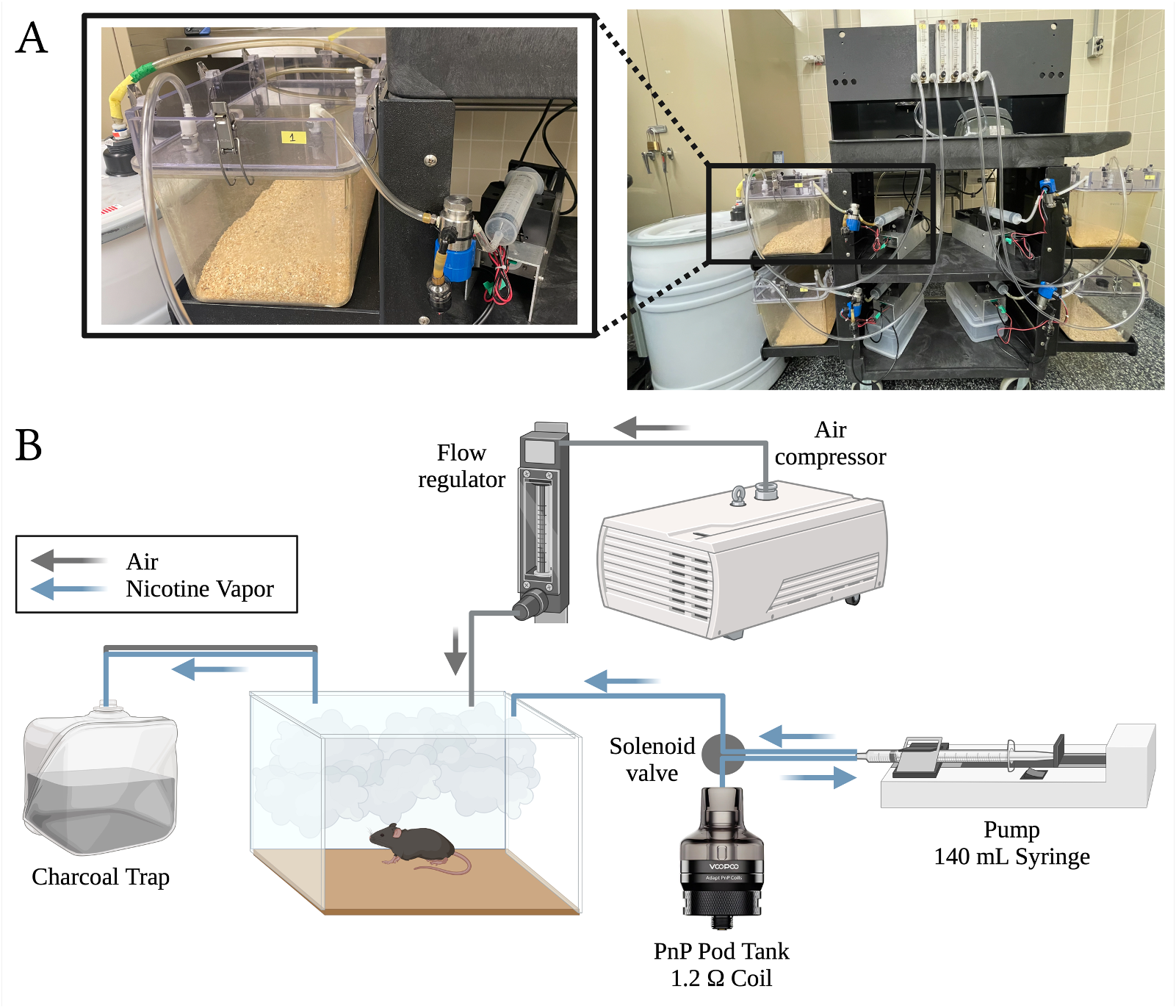 Figure 1 from Zahedi et al. (2026). The custom-built passive vapor system and how air and nicotine vapor move through it.
The first test was whether nicotine gets where it should.
A vapor model is only useful if you know the dose. So before looking at any behavior, we measured cotinine, the main breakdown product of nicotine and the standard biomarker used to measure nicotine exposure in people. We exposed male and female mice to 0, 5, 15, or 50 mg/mL nicotine vapor for one hour and measured serum cotinine shortly after.
Cotinine climbed with dose: on average about 30, 76, and 194 ng/mL across the three nicotine concentrations. Those numbers are great because they span the range below, at, and above the 50 to 70 ng/mL level that Neal Benowitz and Jack Henningfield proposed decades ago as a threshold for nicotine addiction, and they fall in the range reported for light to moderate human smokers. Two published mouse protocols needed three hours and more than twice our highest concentration to get to similar levels.
Males had higher cotinine than females at the highest dose, which matches what has been reported in human smokers and in other rodent vapor studies.
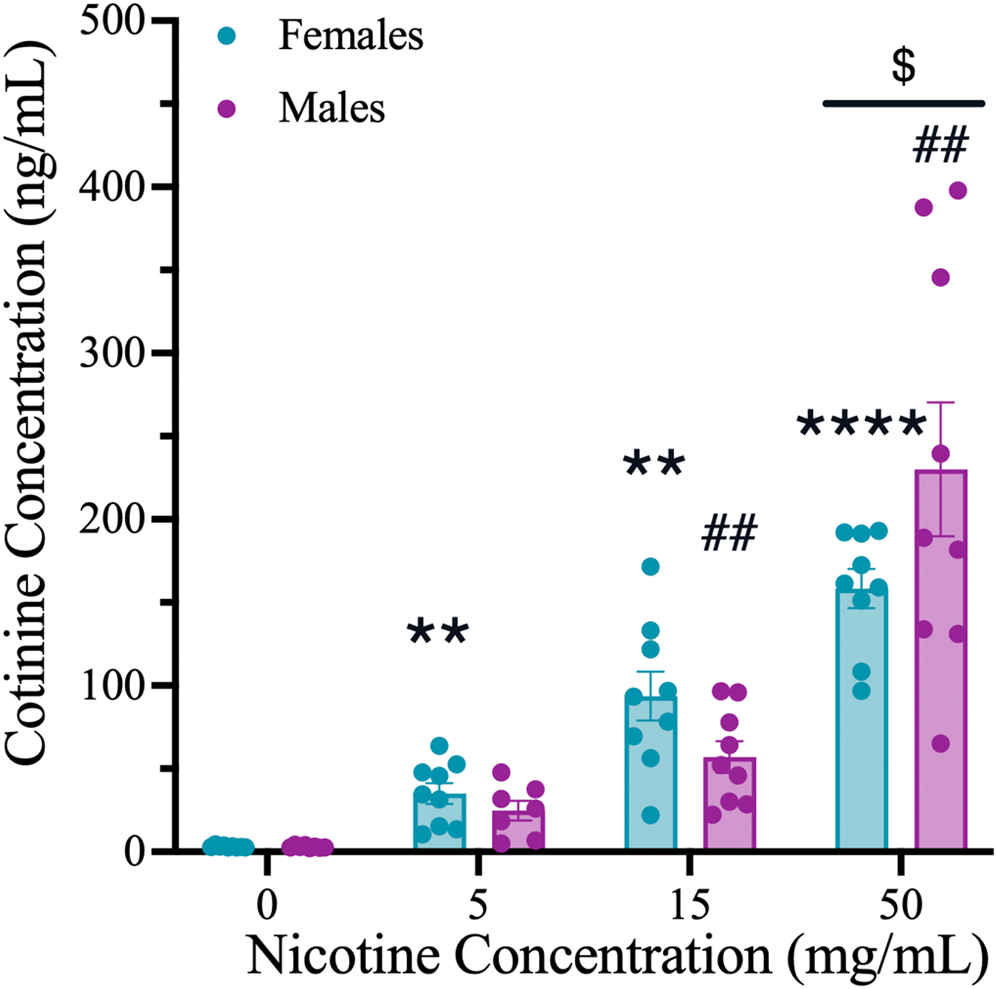 Figure 2 from Zahedi et al. (2026). Serum cotinine rises with nicotine concentration after a single one-hour session, with a sex difference at the highest dose.
Then we asked whether two weeks is enough to produce dependence.
A second cohort of mice received vapor twice a day over two weeks at 0, 5, or 15 mg/mL. We left out 50 mg/mL for this part because 15 mg/mL already put cotinine above the dependence threshold. Twenty-four hours after the last session, we tested them for signs of spontaneous withdrawal.
Both nicotine groups showed clear somatic withdrawal. Their total withdrawal scores were about two and a half times higher than controls, driven mostly by paw and body tremors, which are among the most reliable physical signs of nicotine withdrawal in mice. Three blinded raters scored every video. The 15 mg/mL group was also hyperactive in the open field, which could relate to withdrawal-induced agitatyion and reslessness, classic symptoms in human.
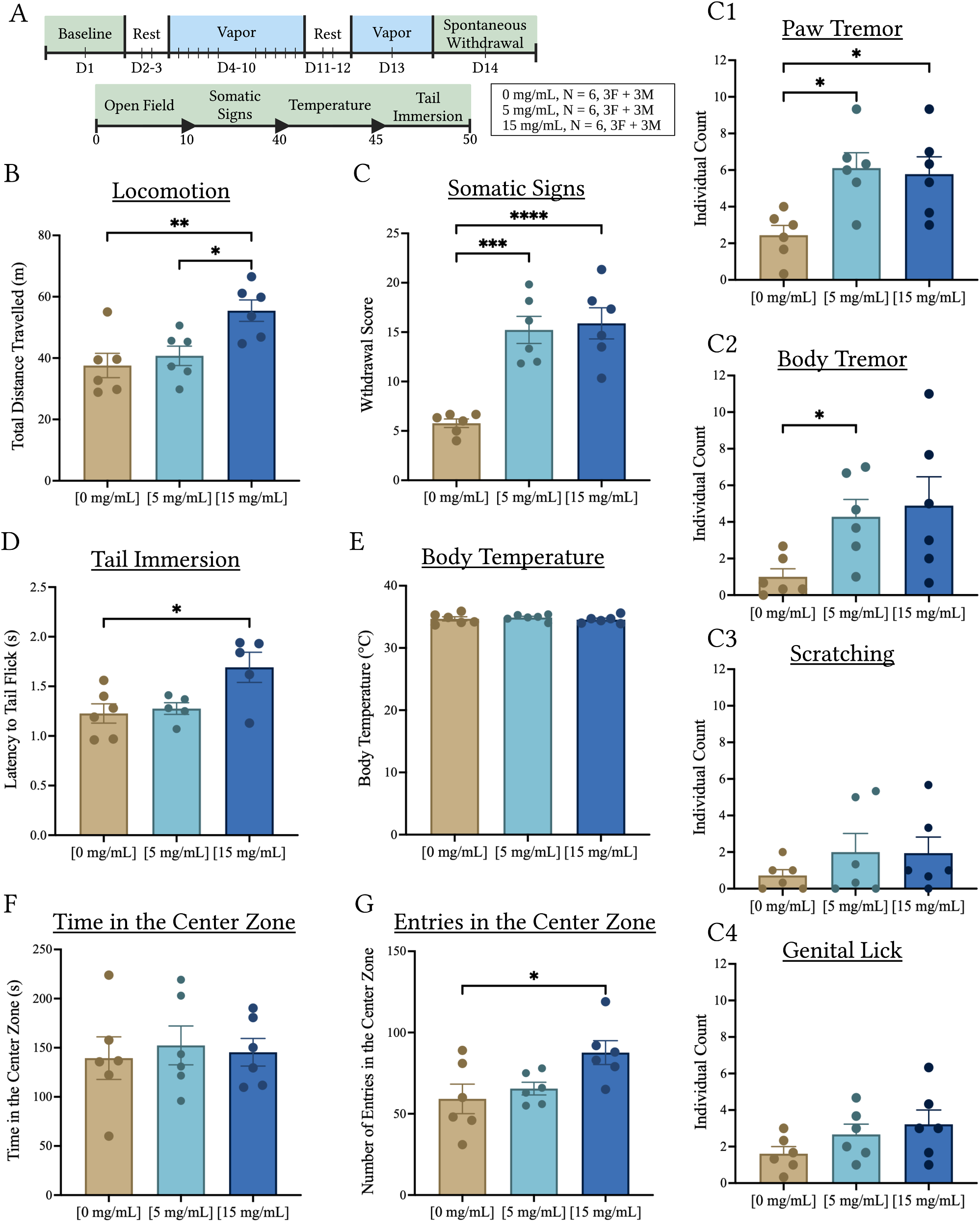 Figure 3 from Zahedi et al. (2026). Two weeks of intermittent vapor produced somatic withdrawal and hyperactivity, without changes in body temperature or anxiety-like behavior.
Some of the results were not what we predicted, and that is useful too.
We did not see the anxiety-like behavior, the drop in body temperature, or the increased pain sensitivity that are often reported during nicotine withdrawal. In fact, the 15 mg/mL mice were slower to flick their tails away from hot water, the opposite of what we expected. Our best explanation is stress-induced analgesia: withdrawal is a physiological stressor, and stress can temporarily dampen pain responses, especially in a spinal reflex test like tail immersion.
I want to be clear about what we are and are not claiming. This protocol reliably produces human-relevant nicotine levels and physical dependence. It does not, at this dose and duration, produce the full affective withdrawal syndrome. That may take longer exposure, more sensitive tests like the elevated plus maze or hot plate, or precipitating withdrawal with a nicotine receptor blocker. The difference from continuous-infusion models like the minipumps, also makes sense to me. People who vape take nicotine in bursts, not as a constant drip, and intermittent exposure may favor sensitization over the kind of tolerance you see with minipumps.
Why does this matter?
Validating a model is slow, and it should be. People outside the field often assume that once you can put an animal in a box and expose it to a drug, you have a model. You don’t. A model is only useful if it is reproducible, if you know the dose that actually reaches the brain, and if the behavior it produces means what you think it means. Getting there takes rigor, and it takes time.
Vapor models are a good example of how hard this is. Every one of them depends on dozens and dozens of parameters: nicotine concentration, freebase or salt, the propylene glycol to glycerin ratio, the coil and the tank, puff volume, puff frequency, session length, airflow, chamber size, how many animals share a chamber, how they are handled, when in their light cycle they are tested. Change one and the result can shift. Our comparison with published mouse protocols shows it well: two studies from the same group, using identical systems and parameters, reported a fourfold difference in serum cotinine. Coil aging, a new batch of solution, or small differences in handling are rarely documented, and they may be enough.
That is why no single paper validates a model. It takes multiple studies, from multiple labs, and a lot of iterative work where you adjust one parameter, measure, adjust another, and measure again. This paper is one round of that process. We chose the parameters we did for concrete reasons, we measured cotinine instead of assuming exposure, we included both sexes, and we reported what did not work as clearly as what did.
This model is not perfect. It does not yet capture the affective side of withdrawal, and it will need to be replicated and refined by us and by others. But it is another step toward vaping models that are reproducible, dose-validated, and closer to how people actually use these products, and that is what the field needs if we want preclinical findings that hold up.
How this fits into our lab’s work.
Nicotine dependence and addiction have been studied in our lab’s work for years, from the CRF neurons in the ventral tegmental area that drive the aversive side of nicotine withdrawal to the CRF circuit that produces anxiety during withdrawal. It remains a core part of how we think about addiction as a disorder driven by escaping withdrawal as much as by seeking reward. In 2014 and 2019 we showed that passive nicotine vapor in adolescent rats produced a withdrawal-like state and facilitated nicotine self-administration in adulthood. Moving a validated vapor model into mice opens the door to the genetic and circuit tools that are much easier to use in mice, and gives us a way to study the molecular underlying of nicotine addiction.
What we still don’t know.
The behavioral cohort was small, three males and three females per dose, so we could not test for sex differences in withdrawal. We did not track body weight or food intake, which matter a lot for nicotine given its effects on appetite. And the absence of anxiety-like behavior may reflect the test we used as much as the biology.
A word of thanks.
Sélène carried this project and I am proud of her. Thank you to Lieselot Carrette for co-supervising, to Lindsey China, Tu La, Joseph Mosquera, and Angelica Martinez for the many hours of exposures and scoring, to Giordano de Guglielmo, and to Frédéric Ambroggi at the Institut de Neurosciences de la Timone for co-supervising Sélène’s PhD from Marseille.
This work was supported by the UC San Diego Polysubstance Addiction Research Center P50DA066459, Tobacco-Related Disease Research Program (TRDRP) grant T32IR5384, and NIH grant R21DA057694. Full paper (open access): Zahedi et al. (2026), Journal of Neuroscience Methods. https://doi.org/10.1016/j.jneumeth.2026.110884
References
- Zahedi S, et al. Passive nicotine vapor exposure model in mice reveals translationally relevant dose-dependent cotinine levels and withdrawal behaviors. J Neurosci Methods (2026). PMID: 42636982
- Kallupi M, de Guglielmo G, Larrosa E, George O. Exposure to passive nicotine vapor in male adolescent rats produces a withdrawal-like state and facilitates nicotine self-administration during adulthood. Eur Neuropsychopharmacol (2019). PMID: 31462388
- Grieder TE, et al. VTA CRF neurons mediate the aversive effects of nicotine withdrawal and promote intake escalation. Nat Neurosci (2014). PMID: 25402857
- Zhao-Shea R, et al. Increased CRF signalling in a ventral tegmental area-interpeduncular nucleus-medial habenula circuit induces anxiety during nicotine withdrawal. Nat Commun (2015). PMID: 25898242
- Benowitz NL, Henningfield JE. Establishing a nicotine threshold for addiction. The implications for tobacco regulation. N Engl J Med (1994). PMID: 7818638
Figures reproduced from Zahedi et al. (2026), Journal of Neuroscience Methods, under a CC BY-NC-ND 4.0 license.