
Anyone who has been through opioid withdrawal, or has cared for someone who has, knows that the pain does not end when the drug leaves the body. Skin that feels raw, a light touch that hurts, aches that come and go for days. Clinicians call one version of this allodynia: pain from something that should not be painful at all. Pain during abstinence is one of the strongest drivers back toward the drug, because the fastest way to make it stop is another dose.
And yet the picture is less simple than it looks. There is also evidence that pain, while real and significant, may not be the main thing driving people back to the drug. The question matters most in the preclinical field, where studies have tended to contradict each other. Some point to pain as a clear driving force: rats with chronic inflammatory arthritis, for example, self-administer more opioid, as if they were medicating their pain. Others found that pain-related manipulations had little or no effect on opioid self-administration, relapse-like seeking, or opioid choice.
Part of the problem is how pain has been studied. Many of these experiments used invasive pain models, like inducing inflammation or injuring a nerve, which may not reflect the allodynia that opioids themselves produce during withdrawal. Many measured pain at a single timepoint in withdrawal. And most used rats with little genetic diversity, in which every animal is expected to respond more or less the same way.
A few years ago, Yavin Shaham and Marina Wolf asked us a simple question: had we ever tracked how pain evolves over time in our cohorts of oxycodone self-administering Heterogeneous Stock rats? The answer was no. That shocked me, given how interested we are in pain and withdrawal. Sometimes the most obvious experiment gets skipped because there is never enough time and you keep getting pulled in other directions. So we got excited and did the study. And because HS rats differ so much from one another, we could ask a second question at the same time: does lingering pain track with how severe each rat’s addiction-like behavior is?
The result is a new paper in Neuropharmacology, led by Sonja Plasil.
We followed pain for three weeks after the drug stopped.
We worked with genetically diverse Heterogeneous Stock (HS) rats, the same outbred population we use for our large genetic studies of addiction. Twenty-two rats learned to self-administer intravenous oxycodone, first in short 2-hour sessions and then in long 12-hour sessions, which is where escalation of intake happens. Fourteen rats went through the exact same procedure with saline instead of oxycodone, and 25 drug-free rats served as naïve controls.
After the last session, we measured how much pressure each rat’s paw could tolerate before it pulled away, using a von Frey device. We did that six times: 4 hours, 12 hours, 1 day, 1 week, 2 weeks, and 3 weeks into abstinence. That longitudinal design is what lets us see who recovers and who does not.
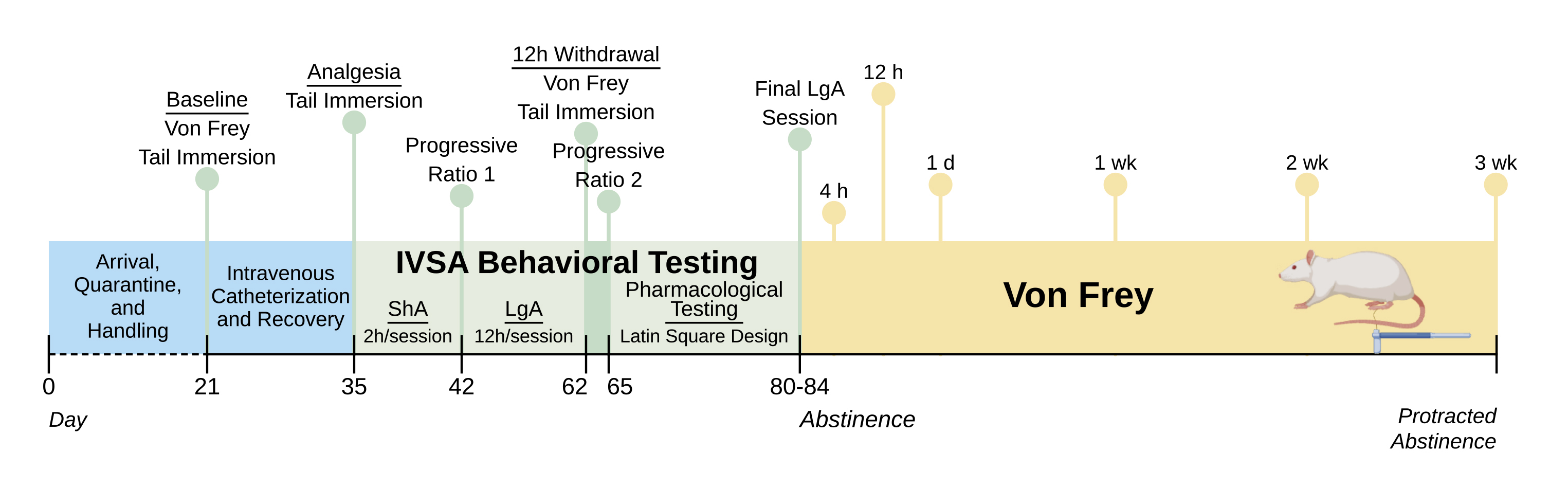 Figure 1 from Plasil et al. (2026). The full experimental timeline, ending with three weeks of pain testing during abstinence.
The first surprise was in the control group.
As a group, the oxycodone rats developed allodynia that lasted up to two weeks and recovered by three. That part we expected. What we did not fully expect was that the saline rats developed it too. These animals never received a single dose of opioid, but they did go through catheter surgery, weeks of handling, and long days in the operant chambers.
It tells us that the experimental procedure itself leaves a mark on pain sensitivity, and that any study measuring withdrawal pain without a saline self-administration control is probably overestimating the drug’s contribution. It also forced us to ask a sharper question: if exposure to oxycodone alone does not explain the pain, what does?
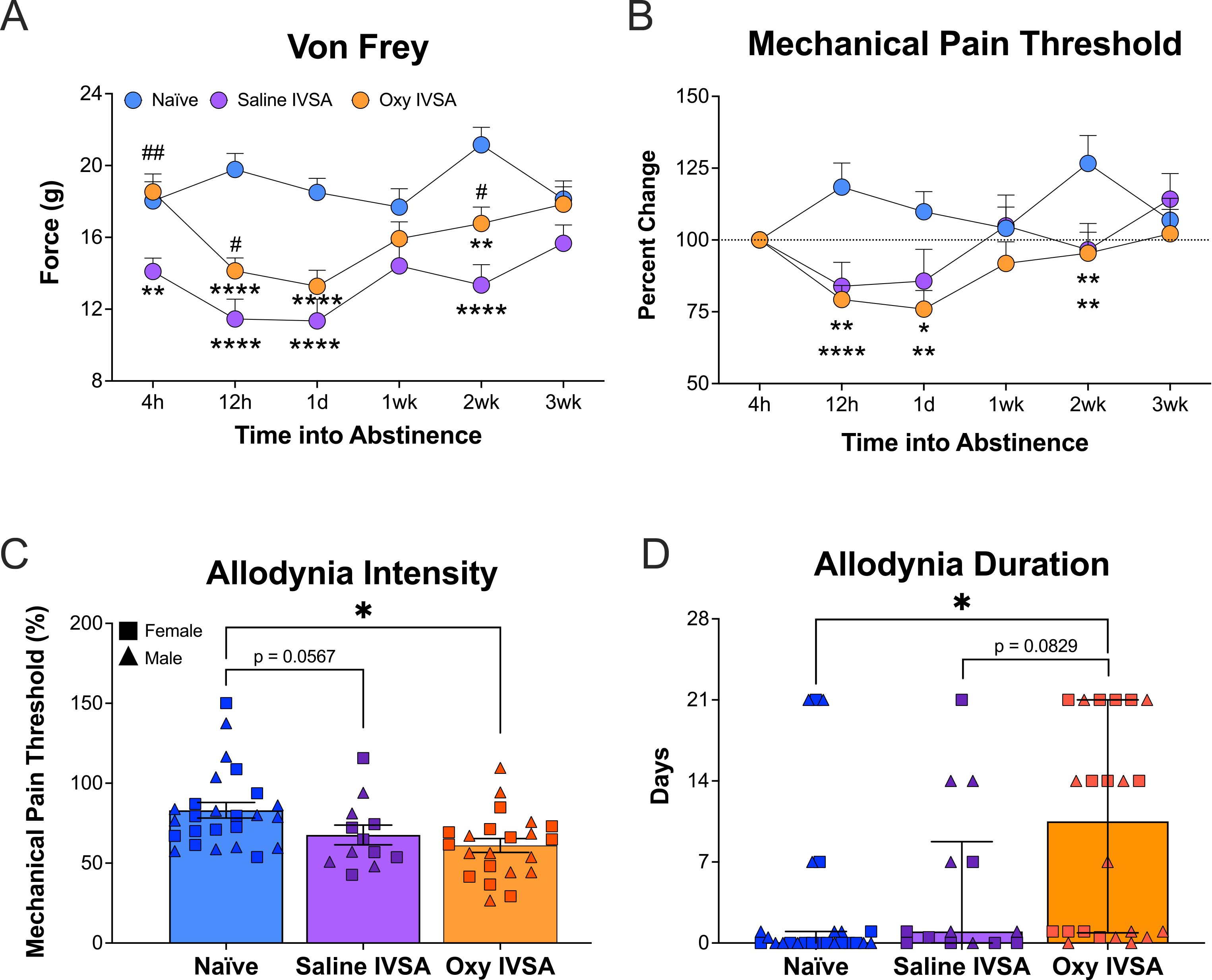 Figure 2 from Plasil et al. (2026). Both oxycodone and saline self-administering rats became more sensitive to touch during abstinence compared to drug-naïve rats.
The answer was addiction severity.
HS rats do not all respond to oxycodone the same way, and that is the point of using them. So we scored every oxycodone rat on an Addiction Index, a composite of four measures: how much they escalated their intake, how hard they would work for a single infusion on a progressive ratio schedule, how much tolerance they developed to oxycodone’s pain-relieving effect, and how sensitive to touch they became 12 hours into withdrawal. Rats with a positive score were classified as High Addiction Index (9 rats), and rats with a negative score as Low Addiction Index (13 rats).
The two groups looked very different. By the end of long access, High Addiction Index rats were taking roughly twice as many infusions as Low Addiction Index rats. Their breakpoints on the progressive ratio schedule jumped after long access, while the Low Addiction Index rats barely moved. And they were the only group that developed clear tolerance to oxycodone’s analgesic effect.
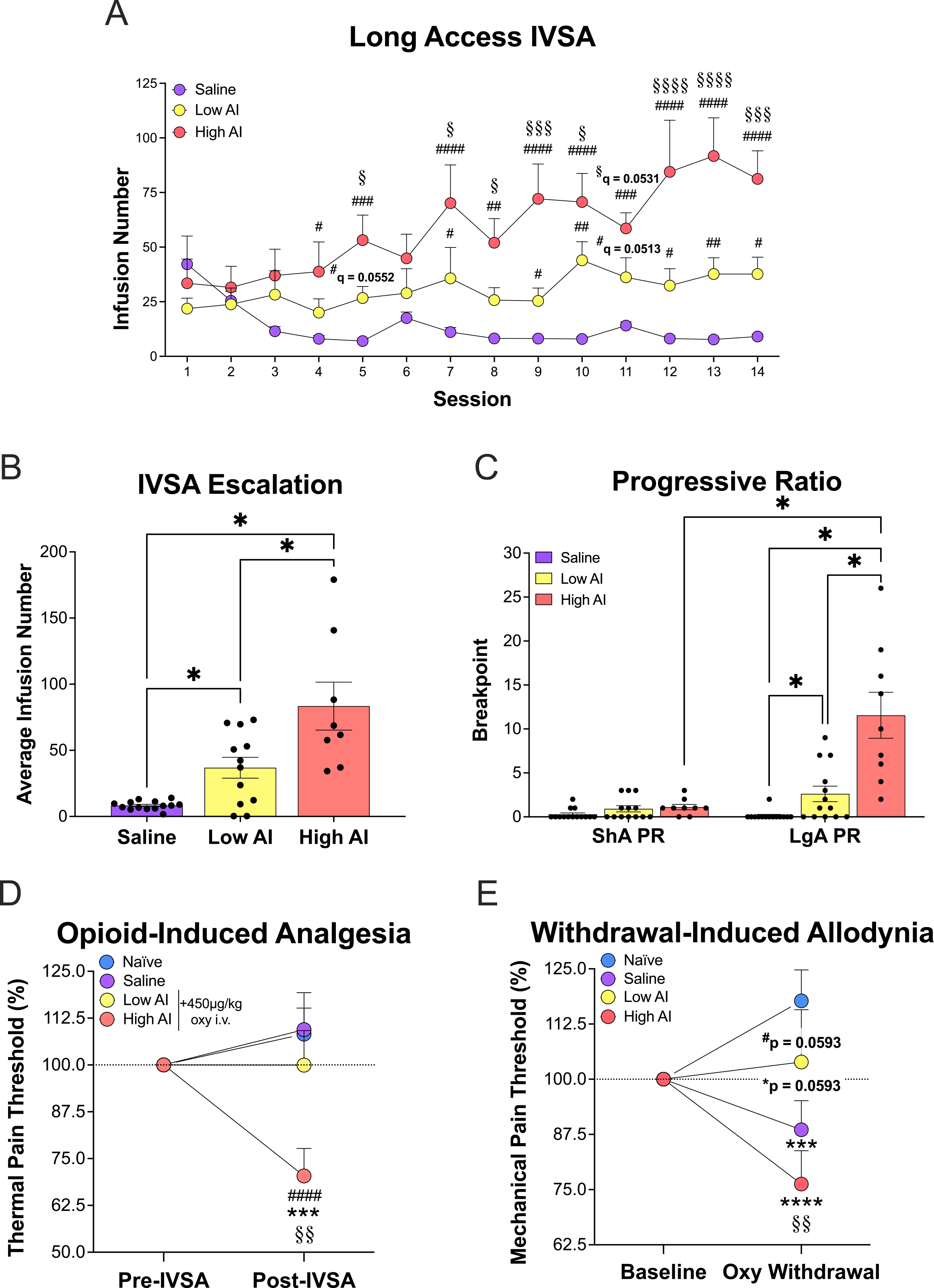 Figure 3 from Plasil et al. (2026). High Addiction Index rats escalated more, worked harder for the drug, and developed tolerance to its analgesic effect.
Then we looked at the pain again.
This is the core of the paper. Once we split the oxycodone rats by Addiction Index, a pattern appeared that was hidden in the pooled data. Early on, at 12 hours, everyone who had gone through self-administration was hurting to a similar degree. But after that the trajectories split. The Low Addiction Index rats and the saline rats began to recover within a day and were back to normal by one week. The High Addiction Index rats kept getting worse through day 1, stayed sensitive at two weeks, and at three weeks were still trending below where they started. They had the most intense allodynia and the longest duration of any group.
In other words, the Low Addiction Index rats looked a lot like the saline rats. Their pain was mostly what the procedure produces. The severe, lingering pain belonged to the animals with severe addiction-like behavior.
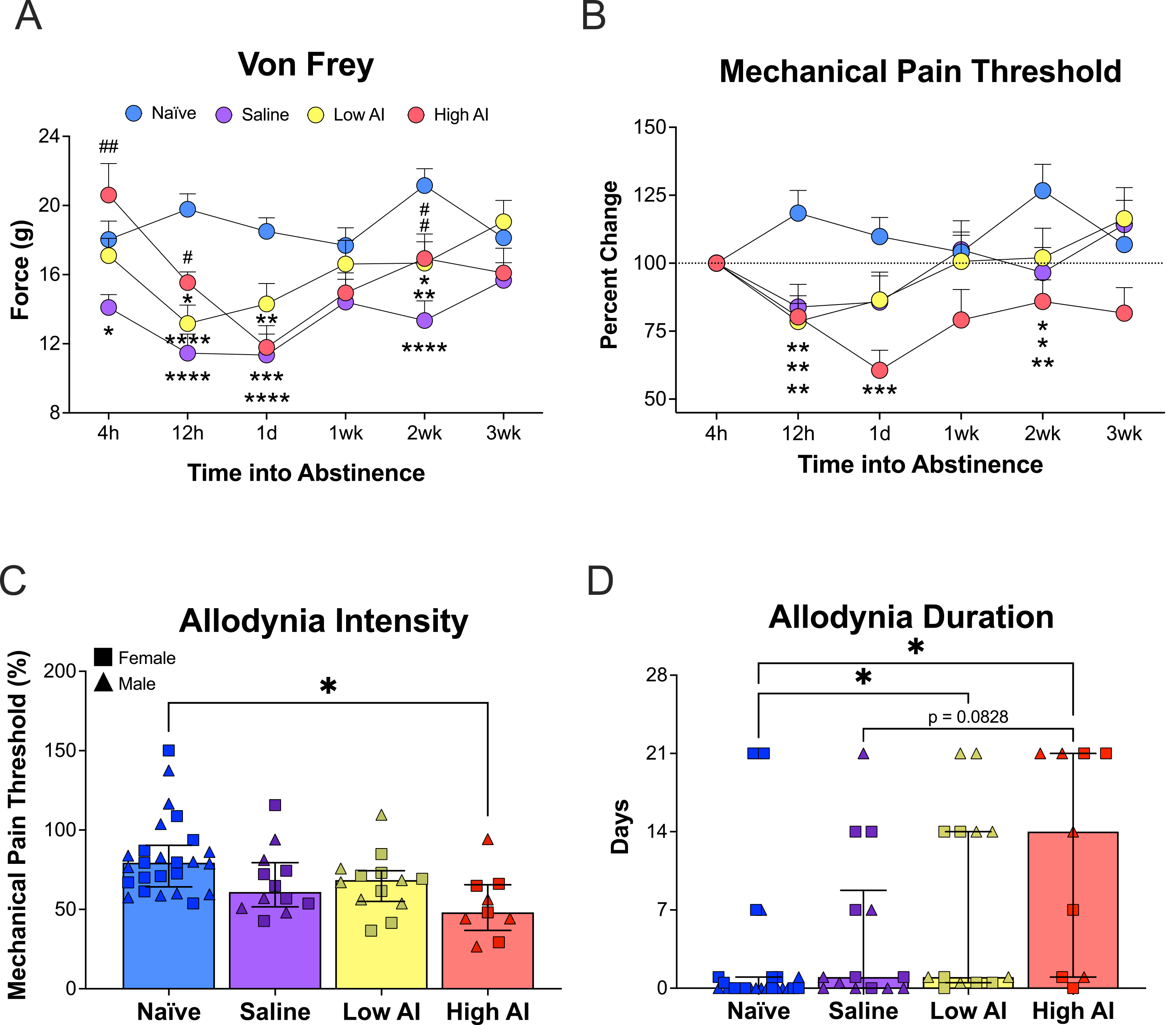 Figure 4 from Plasil et al. (2026). Only High Addiction Index rats showed allodynia that persisted throughout the three weeks of abstinence.
A fair objection is that one of the four measures in the Addiction Index is itself a pain measure, so of course the high scorers have more pain. We checked: when we rebuilt the index without the pain component, the result held: the High Addiction Index rats still showed significant allodynia at 12 hours, 1 day, and 2 weeks while the other rats did not.
Why does this matter for people?
Most clinical withdrawal management is built around a window of days. Detox protocols are designed for the acute phase, and then patients are largely on their own with whatever pain remains. Our data suggest that the people with the most severe opioid use disorder may be the ones still hurting long after that window closes, which is exactly when relapse risk is high and support has already been pulled back.
The features that predicted lingering pain in our rats, escalation of use, strong motivation to get the drug, and tolerance to its analgesic effect, are not trivial. They map onto criteria clinicians already assess. If this holds up in people, those same features could flag patients who need extended pain monitoring and management after they stop using, rather than a one-size-fits-all taper.
These results fit the framework that, for individuals with the most severe addiction, the motivation to take the drug is driven as much by escaping a negative state as by chasing a positive one. Withdrawal pain is a big part of that negative state. What this study adds is that the negative state is not equally distributed. It is heaviest, and lasts longest, in the individuals who are already most vulnerable.
From our lab’s perspective, this is why we phenotype so deeply.
The rats in this study were part of our larger oxycodone GWAS in HS rats, which means every animal went through the same standardized pipeline of intake, motivation, tolerance, and pain measures. That is what made this analysis possible. With an inbred strain, where every animal is genetically identical, you would average the High and Low responders together and conclude that oxycodone produces moderate withdrawal pain that goes away in about a week. That conclusion would be technically correct and practically useless for the people who hurt the most.
It also connects to our earlier work showing that blocking the dopamine D3 receptor reduced both escalation of oxycodone intake and withdrawal-induced hyperalgesia, and to our recent large-scale characterization of oxycodone self-administration in HS rats, where the initial analgesic response to oxycodone was already associated with later addiction-like behavior. Pain keeps showing up as part of the addiction-like phenotype rather than as a separate problem.
What we still don’t know.
We did not detect sex differences, but the study was not powered to find modest ones. We measured one type of pain, mechanical sensitivity in the paw, and not spontaneous pain or the emotional side of pain. Our three-week window was not long enough to see when the High Addiction Index rats fully recover. And we do not yet know the mechanism: whether this lingering pain comes from changes in the spinal cord, in brain stress systems like CRF and glucocorticoids, or both. Those are the next questions.
A word of thanks.
This paper is the product of Sonja Plasil’s persistence, and of a team of students and staff who spent a lot of hours measuring paw withdrawal thresholds: Lani Tieu, Chengjia Qian, Natalie Taylor, Stella Coe, Elizabeth Sneddon, Molly Brennan, Alex Morgan, Dyar Othman, Kathleen Bai, and Sara Foroutani, with Lieselot Carrette, Giordano de Guglielmo, and Marsida Kallupi overseeing them over the years. Leah Solberg Woods and Abraham Palmer provided the HS rats. And a particular thank you to Marina Wolf and Yavin Shaham, whose questions sparked this project in the first place.
This work was supported by NIH grants U01DA044451 and P50DA066459 and by the UC San Diego Polysubstance Addiction Research Center. Full paper: Plasil et al. (2026), Neuropharmacology. https://doi.org/10.1016/j.neuropharm.2026.111197
References
- Plasil SL, et al. Addiction-like behavioral severity predicts prolonged oxycodone withdrawal-induced allodynia in genetically diverse rats. Neuropharmacology (2026). doi:10.1016/j.neuropharm.2026.111197 PMID: 42790729
- Kallupi M, et al. Large-scale behavioral characterization of oxycodone self-administration in heterogeneous stock rats reveals initial analgesic effects are associated with addiction-like behaviors. Neuropsychopharmacology (2026). PMID: 41617925
- de Guglielmo G, et al. Dopamine D3 receptor antagonism reverses the escalation of oxycodone self-administration and decreases withdrawal-induced hyperalgesia and irritability-like behavior in oxycodone-dependent heterogeneous stock rats. Front Behav Neurosci (2019). PMID: 31992976
- Colpaert FC, et al. Opiate self-administration as a measure of chronic nociceptive pain in arthritic rats. Pain (2001). PMID: 11240076
- Reiner DJ, et al. Lack of effect of different pain-related manipulations on opioid self-administration, reinstatement of opioid seeking, and opioid choice in rats. Psychopharmacology (2021). PMID: 33765177
- Koob GF. Neurobiology of opioid addiction: opponent process, hyperkatifeia, and negative reinforcement. Biol Psychiatry (2020). PMID: 31400808
- Carrette LLG, et al. The Cocaine and Oxycodone Biobanks, two repositories from genetically diverse and behaviorally characterized rats for the study of addiction. eNeuro (2021). PMID: 33875455
Figures reproduced from Plasil et al. (2026), Neuropharmacology, © Elsevier.